
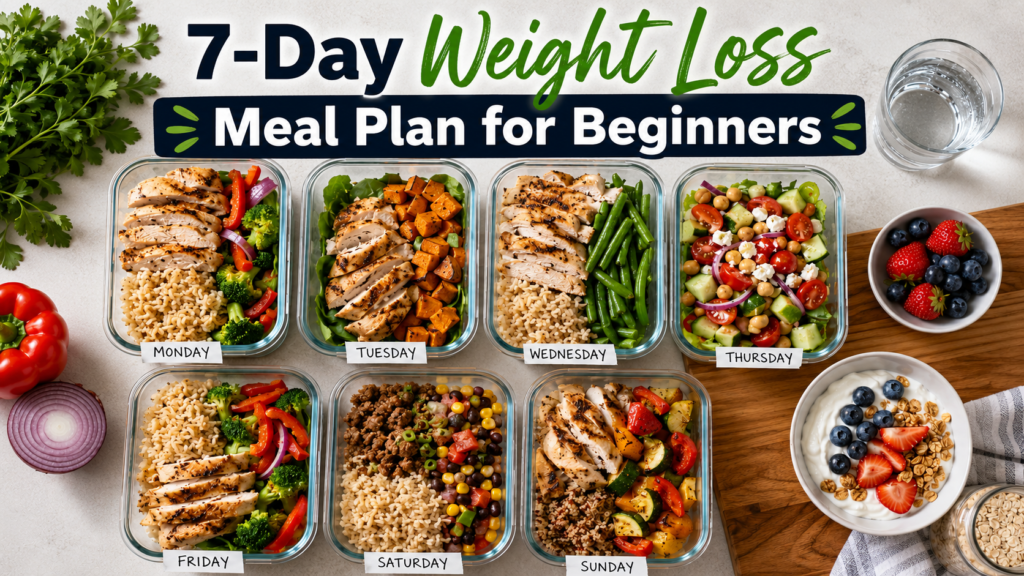
Starting a weight loss journey can feel overwhelming, especially when every plan online seems too strict, too complicated, or too expensive. This simple 7-day weight loss meal plan for beginners is built to feel calm, realistic, and doable. It follows the basic guidance used by major health organizations: eat fewer calories than your body uses, focus on nutrient-dense foods, keep portions reasonable, and aim for steady progress instead of crash dieting. A healthy pattern usually emphasizes vegetables, fruits, protein foods, whole grains, and unsweetened dairy, and it is best to lose weight gradually rather than aggressively.
Quick Takeaways
- Use a simple calorie deficit, not extreme restriction.
- Build meals around the plate method: half fruits and vegetables, plus lean protein, whole grains, and low-fat dairy or dairy alternatives.
- Keep portions clear so “healthy food” does not quietly become too much food. Portion size and serving size are not the same thing.
- Choose foods that help you feel full longer, especially protein foods and fiber-rich foods like beans, vegetables, fruit, nuts, seeds, and whole grains.
- Aim for steady progress, not a 3-day miracle. A gradual pace is more realistic and easier to maintain.
Before You Start: What Beginners Should Know
This meal plan is designed for general adult beginners who want a simple, lower-calorie structure they can follow without obsessing over every bite. It is not a crash diet. Major health guidance recommends losing weight steadily, typically around 1 to 2 pounds per week, and NHS guidance also notes that even a modest loss can improve health.
The easiest way to think about fat loss is this: eat a little less than your body burns, but keep meals satisfying enough that you do not feel deprived. The CDC recommends a healthy eating pattern built from a variety of nutrient-dense foods, while USDA MyPlate suggests making half your plate fruits and vegetables and balancing the rest with lean proteins, whole grains, and low-fat dairy.
One important detail many beginners miss is portion control. A portion is what you actually put on your plate, while a serving size is the amount listed on a nutrition label. They are not always the same, and that difference matters when you are trying to lose weight.
If you have diabetes, high blood pressure, joint pain, an eating disorder, are pregnant, or have another medical condition, it is safer to get personal advice before starting a weight loss plan. NHS guidance specifically recommends seeing a clinician if you have overweight or obesity along with conditions such as diabetes, high blood pressure, sleep apnea, cardiovascular disease, or an eating disorder.
How This 7-Day Meal Plan Works
This plan follows a simple pattern:
- Breakfast: protein + fiber + a little healthy carb
- Lunch: lean protein + vegetables + whole grain or legume
- Snack: something filling, not just “diet food”
- Dinner: balanced plate, light but satisfying
That approach is useful because protein foods, fruits, vegetables, whole grains, and unsweetened dairy are all part of a healthy eating pattern, and fiber-rich foods can help you feel full faster. Fiber also supports digestion and may help with weight control.
For the best results, keep these beginner rules in mind:
- Use smaller plates if needed.
- Measure oils, nut butters, and dressings instead of pouring freely.
- Drink water regularly.
- Keep meals simple enough to repeat.
- Stay consistent for the full 7 days before changing anything. Portion control can be easier when you use smaller plates and measure calorie-dense ingredients like oils.
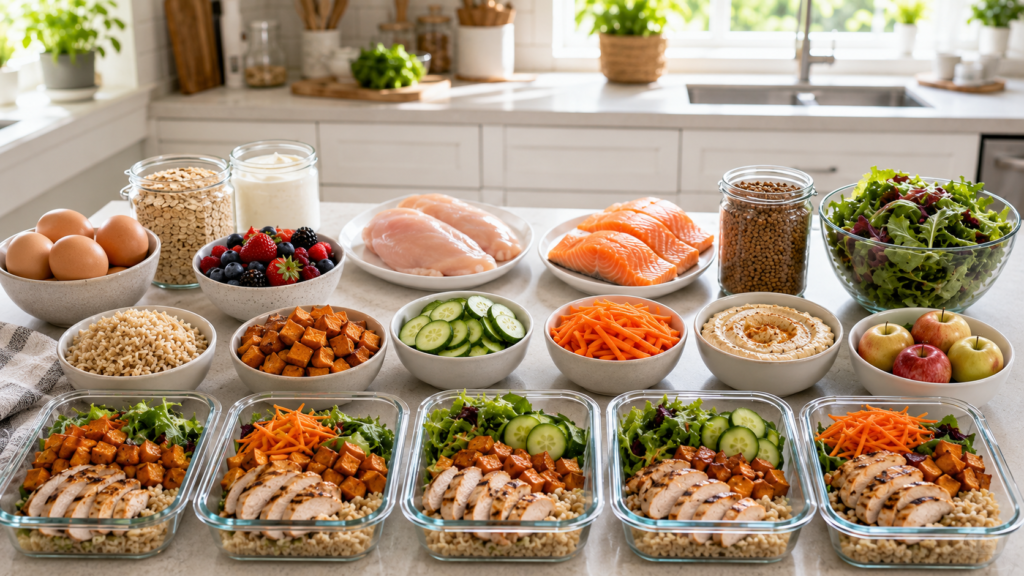
7-Day Weight Loss Meal Plan for Beginners
Day 1
Breakfast: Greek yogurt with berries and a spoon of chia seeds
Lunch: Chicken salad bowl with cucumber, tomato, lettuce, and a small portion of quinoa
Snack: Apple with 1 tablespoon peanut butter
Dinner: Baked salmon, steamed broccoli, and roasted sweet potato
Why it works: this day gives you protein, fiber, and color without feeling boring. It is balanced, filling, and easy to prep.
Day 2
Breakfast: Oatmeal topped with cinnamon and sliced banana
Lunch: Turkey wrap in a whole wheat tortilla with lettuce, tomato, and mustard
Snack: Carrot sticks with hummus
Dinner: Stir-fried tofu or chicken with mixed vegetables and brown rice
Why it works: the meals are simple, portable, and beginner-friendly. Whole grains and vegetables help keep the plate satisfying.
Day 3
Breakfast: 2 eggs with spinach and one slice whole grain toast
Lunch: Lentil soup with a side salad
Snack: Cottage cheese or Greek yogurt
Dinner: Grilled chicken, green beans, and a small portion of rice
Why it works: lentils, eggs, chicken, and yogurt make it easy to get enough protein without overcomplicating the day. CDC includes legumes, eggs, poultry, and dairy as part of healthy protein choices.
Day 4
Breakfast: Overnight oats with berries
Lunch: Tuna salad bowl with mixed greens, cucumber, and avocado
Snack: A pear and a small handful of almonds
Dinner: Turkey chili with beans and a side of steamed vegetables
Why it works: this day is especially useful if you tend to get hungry between meals. Fiber-rich foods can help you feel full faster.
Day 5
Breakfast: Smoothie made with Greek yogurt, frozen berries, and spinach
Lunch: Chickpea salad with tomatoes, onions, cucumber, and feta
Snack: Boiled egg and cucumber slices
Dinner: Baked fish, roasted cauliflower, and quinoa
Why it works: it feels fresh and light while still being structured enough to support weight loss. The goal is not eating less and feeling miserable; it is eating smarter and staying consistent.
Day 6
Breakfast: Whole grain toast with scrambled eggs
Lunch: Chicken and vegetable soup
Snack: Greek yogurt with cinnamon
Dinner: Lean turkey meatballs, zucchini, and whole wheat pasta in a light tomato sauce
Why it works: this day gives comfort food energy without turning into a binge day. Smaller portions and balanced meals make it easier to stay within your calorie needs.
Day 7
Breakfast: Oatmeal with apple slices and walnuts
Lunch: Salad bowl with grilled chicken, chickpeas, greens, and a light vinaigrette
Snack: Orange or berries
Dinner: Sheet-pan chicken with carrots, bell peppers, and potatoes
Why it works: the food is simple, colorful, and easy to repeat next week. That is what makes a beginner plan sustainable.
Simple Portion Guide for Beginners
If you do not want to count calories yet, use this easy plate method:
- Half the plate: vegetables and fruit
- One quarter: lean protein
- One quarter: whole grains or starchy vegetables
- Add a small amount of healthy fat if needed
That structure matches USDA’s MyPlate-style guidance and makes meals easier to build without overthinking.
A simple visual habit also helps: use one bowl, one plate, and one snack portion instead of eating from the package. That reduces the chance of drifting into oversized portions, which is a common reason “healthy eating” still fails to create weight loss.
Beginner Meal Prep Tips That Make This Plan Easier
The biggest reason beginners quit is not lack of willpower. It is decision fatigue. So keep the prep boring on purpose.
- Cook 2 proteins at once, like chicken and turkey.
- Roast a tray of vegetables.
- Make one pot of rice or quinoa.
- Wash fruit and salad greens the day you shop.
- Keep yogurt, eggs, tuna, and hummus ready for fast meals.
These habits make it much easier to stick to the plan because healthy food becomes the easy option. The CDC and USDA both encourage nutrient-dense foods, and the NHS recommends realistic goals and steady progress instead of dramatic restriction.
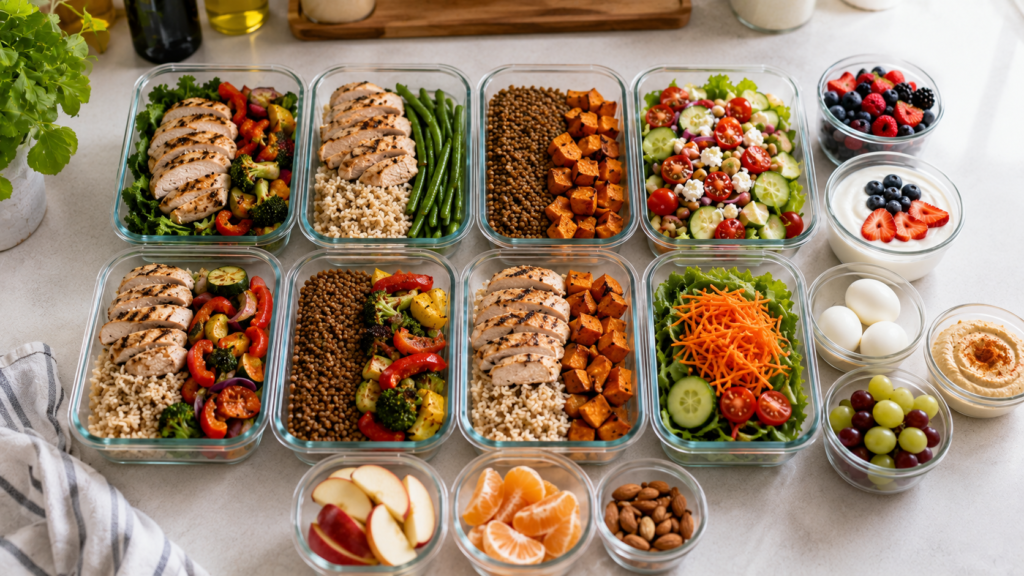
Grocery List for This 7-Day Meal Plan
Protein
- Chicken breast
- Turkey slices or ground turkey
- Eggs
- Greek yogurt
- Cottage cheese
- Canned tuna
- Salmon or white fish
- Tofu
- Chickpeas
- Lentils
- Beans
Carbs and Grains
- Oats
- Whole wheat bread
- Whole wheat tortillas
- Brown rice
- Quinoa
- Whole wheat pasta
- Potatoes or sweet potatoes
Fruits
- Apples
- Bananas
- Berries
- Oranges
- Pears
Vegetables
- Spinach
- Lettuce or mixed greens
- Cucumbers
- Tomatoes
- Broccoli
- Carrots
- Bell peppers
- Cauliflower
- Green beans
- Zucchini
- Onions
Healthy Fats and Extras
- Chia seeds
- Almonds or walnuts
- Peanut butter
- Avocado
- Olive oil
- Hummus
- Cinnamon
- Mustard
- Light vinaigrette
- Salt, pepper, garlic powder, chili flakes
Common Beginner Mistakes to Avoid
1. Eating too little
A plan that is too restrictive often backfires. Sustainable weight loss is usually better when it is gradual rather than extreme. Very low-calorie diets are not suitable for everyone and are usually only recommended in specific situations with professional support.
2. Assuming “healthy” means unlimited
Nuts, oils, dressings, avocado, and even smoothies can become calorie-heavy fast if portions are not watched. Portion size is the amount you eat; serving size is what the label uses.
3. Skipping protein
If meals are too light on protein, hunger usually comes back fast. Healthy eating patterns recommended by CDC and USDA include lean proteins such as poultry, eggs, legumes, soy products, nuts, seeds, seafood, and low-fat dairy.
4. Forgetting fiber
Fiber-rich foods like fruit, vegetables, whole grains, nuts, seeds, beans, and lentils can help you feel full and support digestion. Add fiber gradually so your stomach has time to adjust.
5. Trying to be perfect
Weight loss works better when you are consistent, not perfect. One off-plan meal does not ruin the week.
Frequently Asked Questions
1. Can I lose weight in 7 days with this plan?
You may see changes in energy, bloating, and scale weight within a week, but real fat loss takes more than a few days. A steady pace of about 1 to 2 pounds per week is more realistic and easier to maintain.
2. Do I have to count calories?
No. Beginners often do better starting with portion control and balanced meals first. If you want more precision later, you can track calories, but you do not need to begin there. The key is staying within your daily energy needs.
3. What should I drink on this plan?
Water is the simplest choice. It is also smart to limit sugary drinks because healthy eating plans are recommended to be low in added sugars.
4. Can I repeat this plan next week?
Yes. In fact, repeating a simple plan is often better than constantly changing it. If you like the structure, repeat it and swap proteins, vegetables, and fruits so it does not feel repetitive.
5. What if I get hungry between meals?
Add more vegetables, choose higher-fiber foods, and make sure each meal includes enough protein. Fiber and protein both help with fullness.
6. Is this plan safe for everyone?
No. If you are pregnant, breastfeeding, have diabetes, have an eating disorder, or have another medical issue, you should get personalized advice first. NHS recommends seeing a GP if you have overweight or obesity along with certain conditions or if you think you may have an eating disorder.
7. What is the best dinner for weight loss?
The best dinner is one that keeps you full without overeating: lean protein, vegetables, and a moderate portion of whole grains or starchy vegetables. USDA MyPlate is a helpful simple model for this.
Conclusion
A beginner weight loss plan does not need to be dramatic to work. It needs to be simple, balanced, and repeatable. This 7-day meal plan helps you build that foundation by focusing on nutrient-dense foods, portion awareness, steady progress, and meals that actually feel satisfying. If you keep the same structure and make small improvements each week, you are far more likely to see real results than if you jump from one extreme plan to another.